After three decades of sitting across from patients working to rebuild their lives after addiction, I have learned that recovery is a biological event as much as a psychological one. The brain that arrives in my office has usually been under siege for years. Oxidative stress, inflammation, poor sleep, and depleted micronutrients have all taken a toll long before anyone talked about quitting. Any honest conversation about lasting recovery has to take that biology seriously.
That is why a pigment named zeaxanthin has been catching my attention lately.
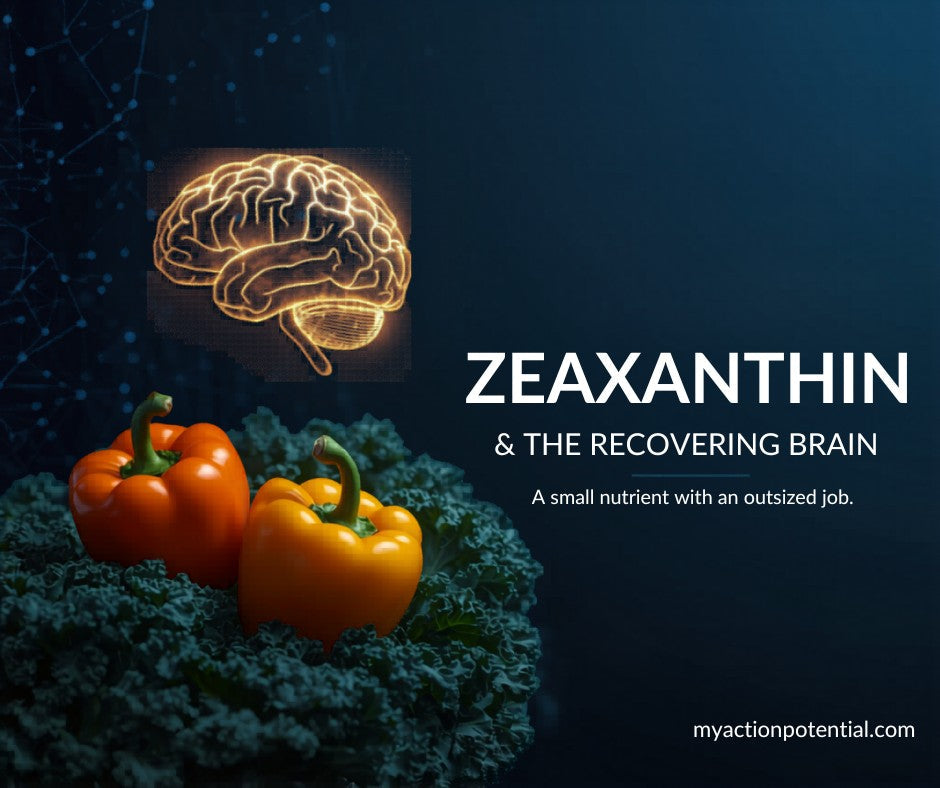
Most people know zeaxanthin, if they know it at all, as the yellow compound that protects the retina. It is one of the carotenoids concentrated in leafy greens, egg yolks, and orange peppers, and its job in the eye is to absorb blue light and soak up free radicals. What is becoming clear from the newer research is that zeaxanthin does not stop at the eye. It crosses the blood-brain barrier and accumulates in brain tissue, where it appears to do many of the same jobs it does in the retina, only in places like the hippocampus and prefrontal cortex.
For a brain trying to recover from years of substance use, that matters.
What the research actually shows
Clinical trials have tested zeaxanthin alongside its cousin lutein, usually at doses of 2 to 10 milligrams of zeaxanthin per day, taken for six to twelve months. In adults who reported cognitive complaints, supplementation improved visual memory, learning, episodic memory, focus, and visuospatial working memory. Complex attention, cognitive flexibility, and processing speed all improved as well, with the largest gains in older adults whose baseline function had slipped the most.
The mechanisms line up with what we see under the hood of the recovering brain. Zeaxanthin lowers oxidative stress and lipid peroxidation in neurons, which is a plain way of saying it protects brain cell membranes from the kind of damage that builds up during chronic drug and alcohol use. It has anti-inflammatory effects on microglia, the brain's resident immune cells, which tend to be stuck in an overactive state in people with substance use disorders. And there are hints it may help raise brain-derived neurotrophic factor, BDNF, the growth signal the brain uses to build new connections.
Population studies push the story further. People with higher dietary intake of zeaxanthin and lutein show better white matter integrity on imaging, better blood flow to memory regions, and in some cohorts up to a 50 percent lower risk of Alzheimer's disease. These are associations, not proof of causation, but they track with everything we know about how a chronically inflamed, oxidatively stressed brain ages.
Why this matters for recovery
Addiction is not a character flaw. It never was. It is a condition in which the brain's reward circuits, executive control, and stress systems have been pushed out of balance, often with a genetic vulnerability underneath. I have written before about the new science of dopamine and addiction, and about why addiction is not really about the drug. The brain in early recovery is a brain trying to rebuild those circuits while running on depleted fuel.
The work on oxidative stress fits right into that picture. Alcohol, stimulants, and opioids all generate free radicals and drive inflammation in the same regions the brain needs most for decision-making and emotional regulation. A nutrient that quiets both of those processes, and that shows up in the same brain regions most affected by chronic use, is worth paying attention to. Zeaxanthin will not replace therapy, medication, or community, but it may give the neurons doing the hard work of relearning a better chemical environment to do it in.
I see this as one thread in a larger story about how nutrition supports recovery. We have covered the gut-brain axis in posts on vitamin D and gut immunity and how gut bacteria may be fueling addiction. We have looked at the mineral that helped brains function seven years younger and how magnetic stimulation is cutting cravings in half. Zeaxanthin belongs in that same conversation. Not as a magic bullet, but as one of the biochemical inputs a recovering brain actually needs.
What to do with this
The food-first approach is straightforward. Leafy greens, egg yolks, orange and yellow peppers, and corn are the reliable sources. Most people in recovery are not eating enough of any of them, especially in the early months when appetite and routine are still being rebuilt. For many of my patients, a daily complete multivitamin paired with a dedicated antioxidant stack gives the brain a more predictable supply than hoping food alone will catch up.
Around that base, the supporting cast matters. Omega-3 fish oil helps carotenoids like zeaxanthin get absorbed and anchors the membrane repair work. Vitamin C and turmeric curcumin layer onto the anti-inflammatory effect. Magnesium glycinate supports the sleep and stress side of the equation, which is where many relapses quietly begin. A good B-complex covers the methylation and energy pathways a stressed brain runs short on. And for patients whose biggest early struggle is focus and mental clarity, Alpha GPC and L-theanine can help steady the signal while the rest of the biology catches up.
If you are not sure where to start, take the product selection quiz and follow your daily protocol. The tools will match your goals and history to a stack you can actually stick with, which is the part that determines whether any of this biology ever reaches the brain that needs it.
Recovery is long, quiet work. A small yellow pigment cannot carry that work alone, and no honest clinician would claim otherwise. But when the science keeps pointing at the same thing from different angles, oxidative stress down, inflammation down, BDNF up, cognitive function up, it is worth putting on the table. The recovering brain deserves every honest tool we have.
Hero image created with AI-assisted design tools.